17 Mar How Computer Vision Is Changing Security and Surveillance
The security industry is evolving with technological advancements. With increasing security threats globally came the need for video surveillance systems that can automate many tasks. The rapid growth in artificial intelligence (AI) and led to the development of sophisticated video analytics and computer vision surveillance software.
Computer vision allows computers to understand and interpret images and videos like humans do. In security and surveillance, it is revolutionizing how we monitor spaces. Instead of relying solely on human observers, a computer vision surveillance system can automatically detect and recognize faces, identify objects, and even analyze behaviors in real time.
Learn how computer vision is changing security and surveillance.
What Is Computer Vision in Security and Surveillance?
Computer vision is a branch of AI that enables computers to see and understand images and videos like humans do. It uses algorithms and machine learning techniques to analyze visual data. These techniques allow computer vision systems to:
- Identify objects
- Recognize faces
- Interpret movements
Since it processes vast amounts of visual information, the system can learn to recognize patterns and make informed decisions based on what it observes.
In security and surveillance, computer vision enhances traditional closed-caption television (CCTV) systems by transforming them into intelligent monitoring tools. These systems help analyze video feeds in real time and detect potential threats that human observers might miss. For instance, computer vision can pick up faces, track movements, and alert security personnel to suspicious activities or unauthorized access.
The technology works by employing deep learning models, particularly convolutional neural networks (CNNs), which break down images into pixels and analyze their characteristics to identify objects and behaviors. These systems become more accurate over time by continuously learning from new data, reducing false alarms and improving response times.
Computer Vision Applications in Security and Surveillance
Computer vision has a wide range of applications in security and surveillance where it significantly enhances the effectiveness of monitoring systems. Here are a few examples of where computer vision is used.
1. Perimeter Security
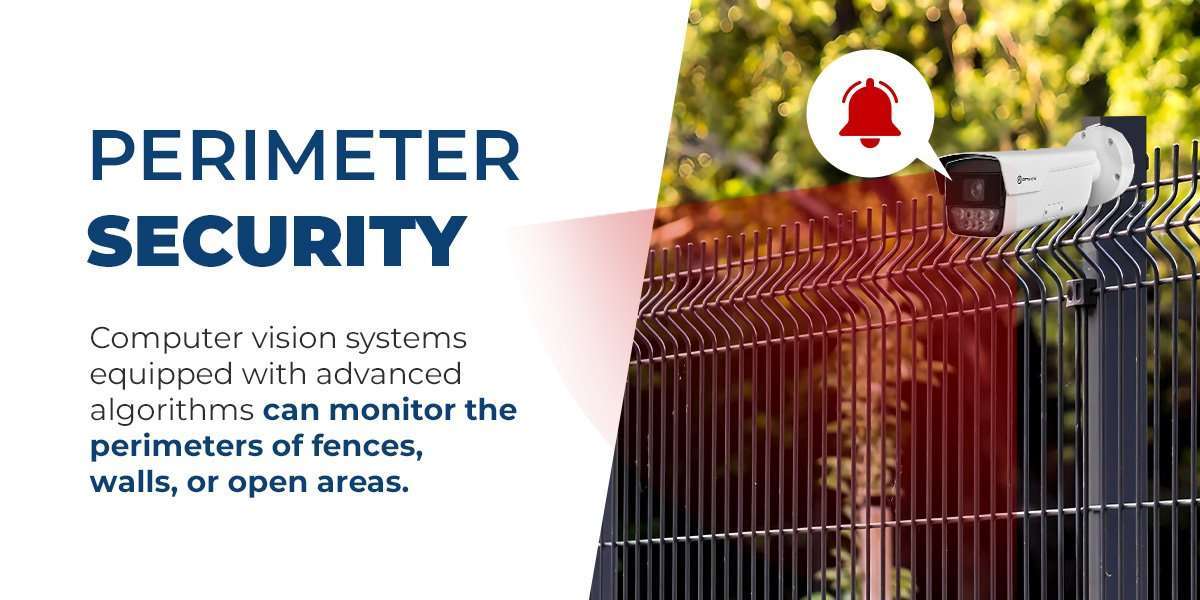
Using computer vision for perimeter security involves setting up invisible boundaries that, when crossed, automatically alert security teams. Computer vision systems equipped with advanced algorithms can monitor the perimeters of fences, walls, or open areas. This technology enhances traditional fencing methods by providing an additional layer of security that is proactive rather than reactive.
A large retail store may use computer vision to monitor its perimeter, focusing on entrances and exits. When someone attempts to leave the store without paying for merchandise, the system detects it and alerts security staff to intervene before the individual exits the premises. Computer vision integrated perimeter security is also useful in high-security areas like military bases, airports, and data centers.
2. Real-Time Threat Detection
Computer vision systems continuously analyze video feeds to identify suspicious behaviors or unusual activities. This could include actions such as someone lingering in a restricted area or attempting to access secure locations. The system can also recognize patterns of normal behavior and identify deviations from those patterns. For example, if a person enters a building after hours, the anomaly detection functionality will pick up on it.
Real-time threat detection provides enhanced situational awareness for many scenarios. For example, an airport security system can use computer vision to analyze passenger behavior. If someone lingers too long in a restricted area or exhibits suspicious behavior, such as leaving a bag unattended, the system alerts security staff to investigate further.
In a smart city scenario, surveillance cameras equipped with computer vision could be deployed throughout public spaces. These cameras can then detect unusual gatherings or altercations in real time, prompting law enforcement to respond quickly to potential disturbances or emergencies.
3. Facial and Object Recognition
Facial recognition technology uses computer vision algorithms to identify and verify individuals based on their facial features. It involves capturing images of faces and comparing them against a database of known individuals. This technology is widely used for access control, monitoring public spaces, and aiding law enforcement in tracking criminals. Customer service can also use it to personalize experiences based on previous interactions.
Beyond faces, computer vision can identify various objects within a visual feed, including bags, vehicles, weapons, or specific clothing. This capability relies on machine learning models trained to recognize these objects. Object recognition can identify suspicious packages, detect weapons in public spaces, and help check for personal protective equipment (PPE) in the workplace to comply with safety regulations.
4. Event Monitoring and Analytics
Since computer vision systems record video footage with real-time analysis, they collect evidence that can be particularly valuable in areas prone to incidents. Additionally, the ability to tag and categorize footage based on specific events makes it easier for security teams to retrieve relevant video evidence when needed.
A computer vision system’s capability to analyze video data allows it to generate valuable insights regarding behavior patterns, traffic flow, and crowd dynamics. This function can help inform security strategies and allocate resources more effectively.
A financial institution, for example, may use computer vision systems to monitor its ATM locations. The system records all activity and uses analytics to detect patterns — such as unusually long wait times or repeated visits by the same individuals. A retail chain, on the other hand, could employ computer vision to analyze customer movements within stores — how customers navigate the aisles, which products attract the most attention, and where they tend to linger. This data can help optimize store layouts and reduce theft opportunities.
Benefits of Computer Vision Surveillance
Computer vision technology provides numerous benefits that enhance safety and operational efficiency. Here are the main advantages:
- Increased accuracy and efficiency: Unlike traditional security systems, computer vision offers automated analysis of video feeds, leading to greater accuracy in threat detection. It reduces the likelihood of human error and ensures potential threats are identified promptly and accurately. Advanced algorithms can distinguish between genuine threats and benign activities. This functionality lowers the false alarm rate and saves resources.
- Cost-effectiveness over time: While the initial investment in computer vision technology may be substantial, the long-term savings are significant. Automated systems reduce the need for constant human intervention, leading to lower labor costs.
- Enhanced scalability and adaptability: Computer vision solutions can be integrated into existing security infrastructure to enhance systems without complete overhauls. This technology can be updated and scaled to meet changing security needs.
- Enhanced security and response: Computer vision systems enable immediate responses to incidents. AI-powered CCTV can detect weapons, recognize ski masks, and track suspicious behavior, allowing for quicker intervention.
Leverage the Power of Computer Vision With Optiview
Different businesses have unique security needs based on their environment and risks. Computer vision technology enables security systems to monitor and analyze video feeds to detect immediate potential threats. As organizations grow or change, their security needs evolve too. Computer vision technology can enhance current security infrastructures with integrated computer vision technology.
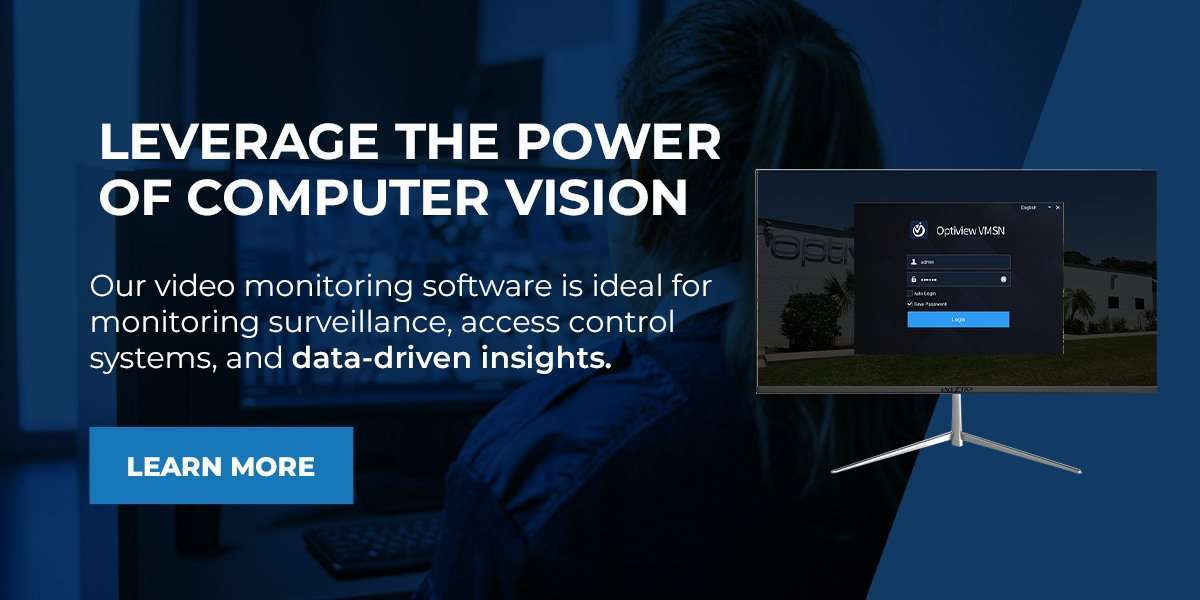
Optiview offers tailored solutions to use the power of computer vision for enhanced safety and efficiency. Our video monitoring software is ideal for monitoring surveillance, access control systems, and data-driven insights.
For more information on integrating computer vision into your security infrastructure, contact Optiview.